Hartmann Antiques New Paltz, New York
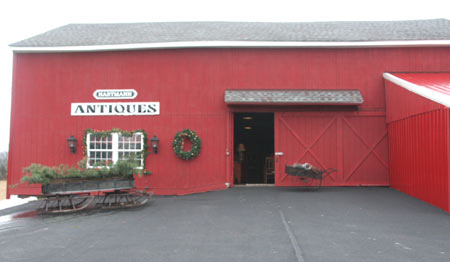
Welcome to our 2000 square foot refurbished 2 story historic barn in southern New York State just over the boarder from Orange County into Ulster, just 15 minutes northwest from Newburgh and south of New Paltz. Our barn sits overlooking the Shawangunk Mountain range where Mohonk House and Minniwaska are located.
 Looking for a dresser made with real wood instead of meatloaf and glue? One with drawers that roll smoothly and gently? Or a table that speaks of its maker’s pride of craftsmanship with carved legs and beautiful grain? How about a bookcase of real mahogany, perhaps with glassed-in shelves, or a new bed frame, graceful, with elegant lines?
Discover the skill of yesterday’s craftsmen and the beauty of the distinctive furniture, jewelry and other durable goods they made from the raw, and improved with fine carvings and functional embellishments. The Skylands region burgeons with antiques and collectible shops. A sampling is represented here.
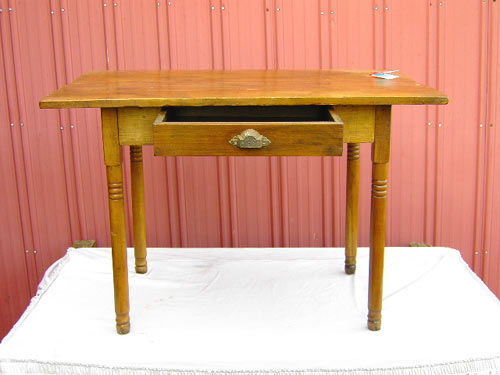
For the uninitiated, one dealer says that “antique” is over 100 years old; “vintage” is more than 50; and “collectible” is a series. “Primitive” is a word that creates confusion. A primitive is an item that someone usually made at home out of necessity. A popular fantasy seems to be that the woman of the family had to bug the man to go make her a cupboard or table. Eventually he did, using wood from around the farm. He often used more than one kind of wood to make a piece cherry and pine were a common combination. “A guy made it to do the horse-shoeing and he uses it for 80 years. It’s left in the barn and when the house is sold, it’s found. Each one is different because they made it for their purpose,” says Kerry Konopka, owner of Hartmann Antiques in Lafayette. One sign of an older piece with quality craftsmanship is “dovetailing,” a technique to interlock two boards. The dovetails on one board were cut to fit into cut-outs on the second board. It was all done by hand.